

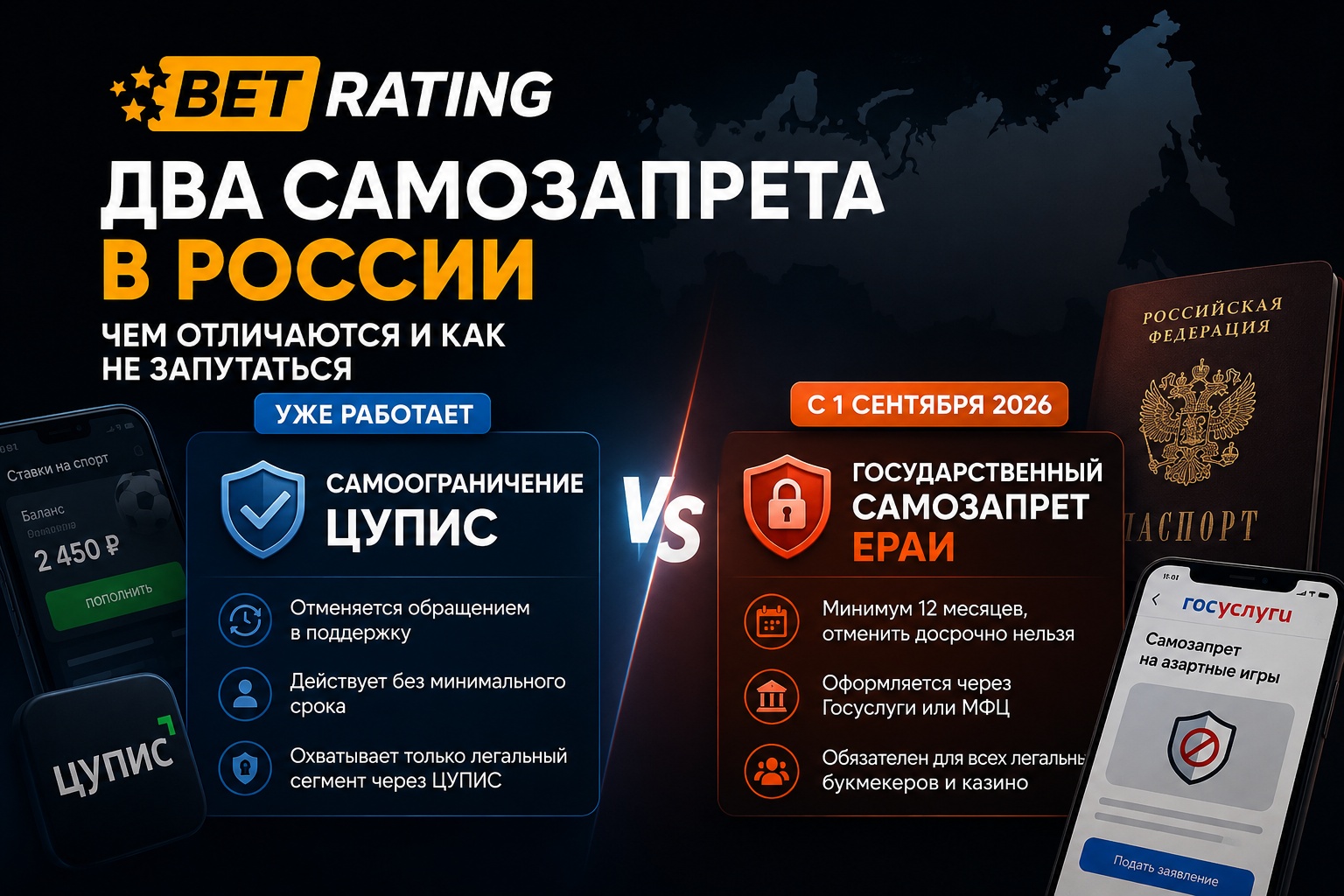
Starting September 1, 2026, a new state mechanism for self-exclusion from gambling will be implemented in Russia. However, under the same term "self-exclusion," a much softer tool has been in operation in the country for almost two years. Let's break down what these two different systems are and how not to confuse them.
In the previous article about fines for violating self-exclusion, we examined Law No. 248-FZ — sanctions for bookmakers and casinos that do not comply with player restrictions. However, there is an important nuance regarding the self-exclusion mechanism that is easy to overlook: right now in Russia, there are not one, but two different systems with very similar names and completely different rules.
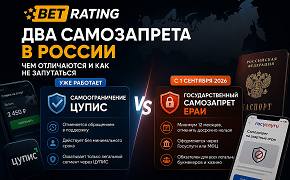
We will clarify the differences between the already functioning self-exclusion via TSUPIS and the new state self-exclusion that will come into effect on September 1, 2026, and why they should not be confused.
In brief: two different systems
| Criterion | Self-Exclusion via TSUPIS | State Self-Exclusion by ERAI |
|---|---|---|
| Legal status | Industry practice, not established by a separate law as mandatory for all | Federal Law No. 575-FZ of December 29, 2025 |
| When it takes effect | For about two years | From September 1, 2026 |
| How to apply | Request to TSUPIS support | Through the "Gosuslugi" portal or MFC |
| Minimum term | According to external guidelines — from several months to several years depending on the chosen option; no official unified TSUPIS rules available publicly | 12 months, thereafter at the applicant's discretion |
| Official name | "Responsible Gaming" service, launched in 2023 | State self-exclusion in the ERAI registry |
| How to cancel | Through a request to support, after the specified cooling-off period | Cannot be done before 12 months; thereafter, a separate new application is required |
| Operational principle | "Single window" — TSUPIS representatives have publicly confirmed this principle | Single closed registry, mandatory for all legal operators |
| Market segment covered | Only the legal market, visible through the TSUPIS payment system | All legal bookmakers, totalizators, and casinos are required to comply by law |
| Registry publicity | Internal database of the payment operator | Closed registry — access only for operators, TSUPIS, and supervisory authorities |
How the old self-exclusion via TSUPIS works
The Unified Center for Accounting Betting Transfers (TSUPIS) is the payment infrastructure through which legal bookmakers in Russia have been processing transactions for several years. Back in 2023, before a separate law on state self-exclusion was adopted, TSUPIS launched the "Responsible Gaming" service: the ability to set self-exclusions, limits, and total self-exclusion through a request to support.
The key feature of this mechanism is its flexibility compared to the new state self-exclusion. The restriction can be lifted through a request to support, after the specified cooling-off period — a representative of the Unified TSUPIS has publicly confirmed that the service operates on the "single window" principle and that lifting the restriction is relatively easy, unlike the rigid annual model that will come into effect on September 1.
How the new state self-exclusion will work
Federal Law No. 575-FZ of December 29, 2025, introduces a fundamentally different model — starting September 1, 2026. The list of citizens who have opted out of participating in gambling is maintained by the Unified Regulator of Gambling (ERAI), and all legal bookmakers, totalizators, and casinos are required to refuse services to such individuals not voluntarily, but due to a direct legal requirement.
- The application is submitted through the "Gosuslugi" portal or any MFC, regardless of the place of residence.
- The minimum self-exclusion period is 12 months; the applicant has the right to choose a longer period.
- The regulator must enter the applicant's data into the registry no later than 12 hours.
- Bookmakers and casinos must refuse such individuals access to betting, games, personal accounts on the website, and the gambling establishment itself.
- Gambling organizers are also prohibited from sending such individuals advertisements.
- Early cancellation of self-exclusion is not allowed. After the minimum term, a separate new application must be submitted to exit the registry and wait again.
- The registry itself is not published in the public domain — access is only available to gambling organizers, TSUPIS, and supervisory authorities.
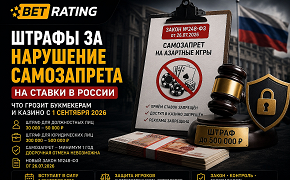
It is precisely for violating these rules that bookmakers and casinos face fines under Law No. 248-FZ, which we discussed earlier — up to 500,000 rubles for legal entities.
Why these are different tools, not versions of the same
The difference is not a technical detail, but a fundamentally different philosophy of player protection.
These are different responses to different situations. For a person who wants to temporarily limit themselves but is not sure they are ready for a strict annual commitment, the flexible TSUPIS mechanism may be suitable. For someone who consciously wants to create a barrier that cannot be bypassed under the influence of the moment, the state self-exclusion is specifically designed for that.
What the law does not yet address
Despite the significance of the new mechanism, there are open questions that deserve attention.
No connection to treatment and support
```htmlThe law records the refusal to play at the service access level, but does not directly link it to the hotline, psychological assistance, or medical support.
Application is submitted only by the individual
Inclusion in the registry is possible only at the initiative of the citizen themselves—there is no formal tool for relatives, who often notice the problem first, to initiate the process.
This does not mean that the mechanism is useless—it rather addresses a specific task (limiting access to the game) but does not replace a broader support system for gaming addiction.
What to do in practice
| Situation | What will work |
|---|---|
| I want to take a break temporarily, but I'm not sure about the year | Self-restriction through TSUPIS |
| I want to create a barrier that I won't cancel under the influence of the moment | State self-ban through "Gosuslugi" or MFC |
| I play on both legal and illegal platforms | Neither mechanism will block the illegal segment—both operate only within the regulated infrastructure |
What will happen next
- Will self-restriction through TSUPIS remain a separate option alongside the state registry, or will the two mechanisms merge over time;
- Will there be amendments allowing relatives to initiate a person's inclusion in the registry;
- Will the self-ban be integrated with the psychological and medical support system in any way;
- How quickly will significant statistics accumulate on the new state mechanism after September 1, 2026.
Conclusion
From September 1, 2026, two mechanisms with similar names but different logic will operate simultaneously in Russia. Self-restriction through the TSUPIS service "Responsible Gaming" is a more flexible tool that can be lifted by contacting support after a cooling-off period, covering only the legal segment of the market. The state self-ban through the ERAI registry is a much stricter barrier for a minimum of 12 months without the right to early cancellation, reinforced by fines for operators who do not comply.
Understanding the difference between these two systems is important not only theoretically: the choice of a specific mechanism affects how quickly you can cancel it if you change your mind—and that is why the decision should be made consciously, not confusing one with the other.
Frequently Asked Questions
What is the difference between TSUPIS self-restriction and state self-ban?
TSUPIS self-restriction can be canceled at any time by contacting support, and it covers only the legal segment of the market. The state self-ban through the ERAI registry lasts for a minimum of 12 months without the right to early cancellation and is mandatory for compliance by all legal bookmakers, totalizators, and casinos.
When will the state self-ban come into effect?
From September 1, 2026, according to Federal Law No. 575-FZ dated December 29, 2025.
How to apply for a state self-ban?
Through the "Gosuslugi" portal or any MFC, regardless of the applicant's place of residence.
Can the state self-ban be canceled early?
No. The minimum term is 12 months, and during this period, the application cannot be canceled. After the term expires, a separate new application must be submitted to exit the registry.
How is self-restriction through TSUPIS canceled?
By contacting TSUPIS support after the cooling-off period—service representatives have confirmed that cancellation is relatively easy, following the "single window" principle, unlike the strict annual model of the state self-ban.
Does the self-ban block access to illegal platforms?
No, neither of the two mechanisms applies to the illegal segment of the market—both operate only within the regulated Russian infrastructure.
Can a relative apply for a self-ban on behalf of another person?
No, inclusion in the registry is only possible by the application of the citizen themselves—the law does not provide for initiatives from third parties.
Is the registry of those who have refused gambling published publicly?
No, access to the registry is only available to gambling organizers, TSUPIS, and supervisory authorities.
Sources
- Federal Law No. 575-FZ dated December 29, 2025, "On Amendments to Certain Legislative Acts of the Russian Federation"
- GARANT.RU—"Russians will be able to ban themselves from participating in gambling and placing bets," December 2025
- TASS—"Requirements for bookmakers in Russia will expand due to the emergence of self-ban on games," May 2026
- Legalbet.ru—"The bill on self-ban on bets and gambling was passed in the first reading," May 2025
- Metaratings.ru—"What will change in betting in Russia from September 1: self-ban, new advertising, and blockages," August 2026
This material was prepared by BET RATING based on the text of Federal Law No. 575-FZ and publications from Russian media as of August 2026. The operation of both mechanisms may be clarified by regulators and payment infrastructure operators.
Gambling is associated with the risk of losing money and can lead to addiction. If you or someone close to you is struggling to control their gambling, consider seeking support—both through the access restriction mechanisms described in this article and from specialists working with gambling addiction.


























































































Comments 0
Please log in on the site, чтобы добавить комментарий, лайк или дизлайк.