

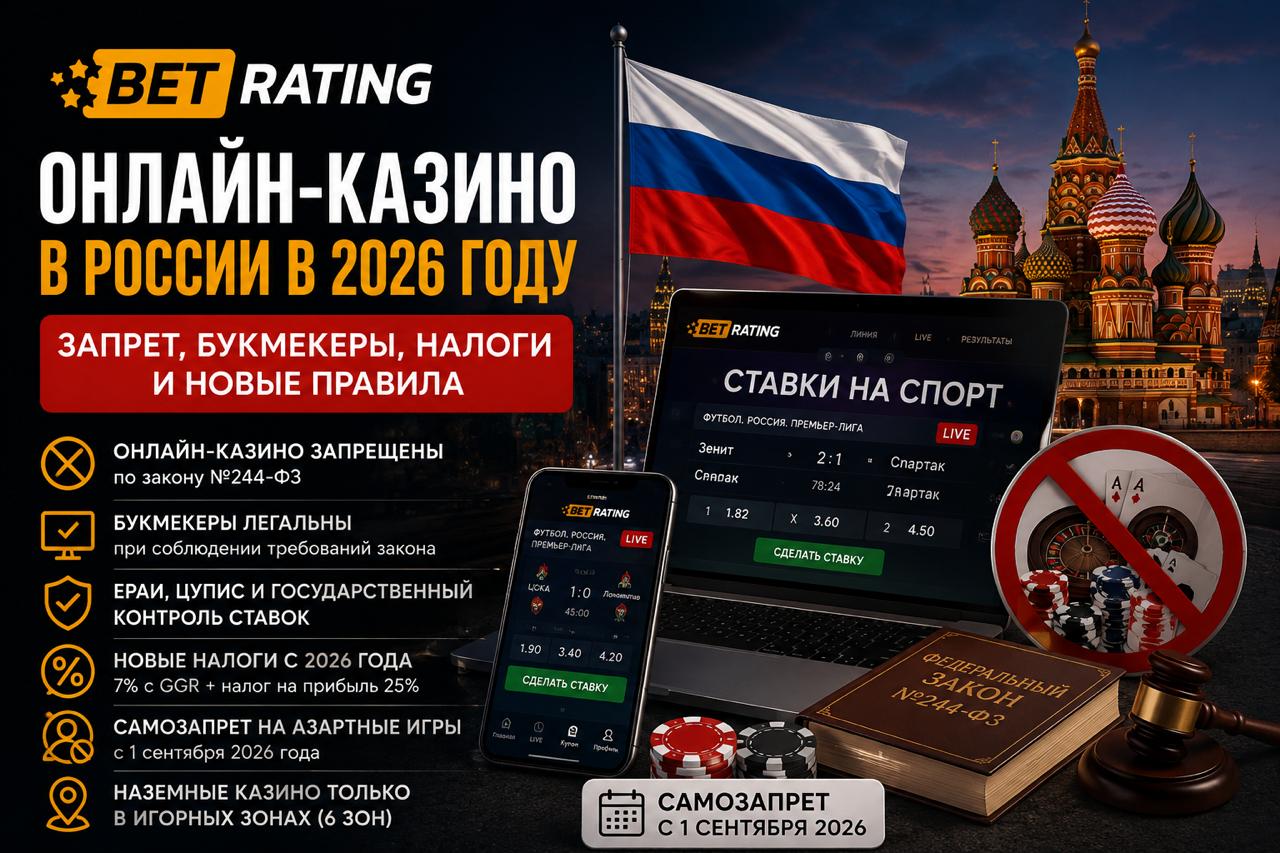
The same mouse click — but from a legal perspective, these are two different universes. Let's analyze why online casinos are banned while betting with bookmakers is legal.
Russia is among the countries where the legislation draws a very clear line between online casinos and legal bookmaker betting.
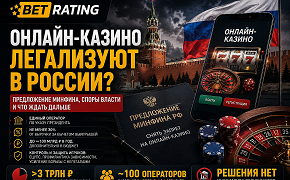
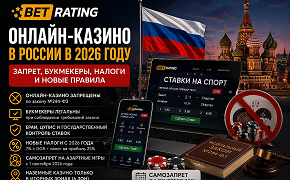
Online casinos in Russia do not have a separate licensed market. Federal Law No. 244-FZ explicitly prohibits the organization and conduct of gambling via the internet and other communication networks, making an exception for interactive bets accepted by legal bookmakers and totalizators in accordance with the law.
At the same time, regular casinos in Russia also cannot operate freely in any city — they are allowed only in specially designated gambling zones, of which there were six by 2026.
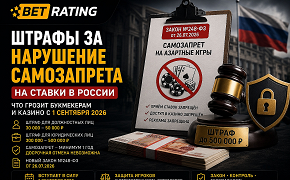
Simultaneously, in 2026, the Russian gambling market underwent several important changes: a new tax model was introduced for bookmakers, the threshold for tax-free winnings was abolished, and from September 1, 2026, a mechanism for voluntary self-exclusion from participation in gambling will be implemented.
We will explore why online casinos are banned while internet betting is legal, how the Russian bookmaker market operates, who pays taxes on winnings, and what changed in 2026.
In Brief
| Question | Russia in 2026 |
|---|---|
| Online Casinos | Banned |
| Online Slots for Money | Banned |
| Online Roulette and Card Casino Games | Banned |
| Bookmakers | Legal if complying with legal requirements |
| Online Sports Betting | Permitted with legal bookmakers |
| Totalizators | Regulated |
| Land-Based Casinos | Only in gambling zones |
| Number of Gambling Zones by Law | 6 |
| Tax on Gambling Business for Bookmakers from 2026 | 7% of the difference between bets and paid winnings |
| Profit Tax for Bookmakers from 2026 | 25% |
| Threshold for Tax-Free Winnings (15,000 ₽) | Abolished since 01.01.2026 |
| Self-Exclusion from Gambling | From September 1, 2026 |
| Main Law | Federal Law No. 244-FZ |
Main Principle: Online Casinos are Banned in Russia
The basic rule is contained in Article 5 of Federal Law No. 244-FZ. The law prohibits the organization and conduct of gambling using information and telecommunications networks, including the internet, as well as communication means. The only key exception is the acceptance of interactive bets and the payment of winnings by legal bookmakers and totalizators in accordance with the established legal procedure.
Therefore, the statement "gambling on the internet is completely banned in Russia" is also not entirely accurate.
Which Online Games Fall Under the Banned Segment
There may be websites on the internet offering Russian users slot machines, roulette, blackjack, baccarat, dice games, live casinos, crash games, and other casino products with monetary bets.
The availability of such a site from Russia does not, by itself, mean that the site's activities are legal.
Moreover, from September 1, 2024, legislation has specifically strengthened the ban on gambling with material winnings determined randomly using software or technical equipment and accessed via the internet or other communication networks.
In other words, the Russian model does not provide for a legal license for a classic online casino.
Why Bookmakers Can Operate Online While Casinos Cannot
At first glance, this may indeed seem contradictory. The user in both cases accesses a website or app, tops up their balance, selects an event or game, risks money, and either wins or does not win.
But for the law, these are different categories of activity. In a bookmaker's bet, the outcome depends on the result of a specific event — for example, a sports match. In a casino, the outcome is determined by the gambling game itself: roulette, card dealing, slot machine, or another gaming system.
This is precisely why the legislator made a separate exception for interactive bookmaker bets but not for online casinos.
Online Betting is Legal in Russia
Legal bookmakers can accept interactive bets via the internet. However, this does not mean that any bookmaker website accessible to Russian users operates legally.
The operator must comply with Russian legislation and operate within a regulated system. Thus, it is necessary to distinguish between a legal Russian bookmaker and a foreign bookmaker's website that is simply accessible from Russia.
A foreign license does not, by itself, replace the requirements of Russian legislation.
ERAIS and the Unified Betting Accounting Center
The Russian bookmaker market is built around a centralized control infrastructure. One of the key elements is the Unified Regulator of Gambling — ERAIS. Its emergence was part of a large-scale reform of the bookmaker market aimed at centralizing the control of cash flows and the interaction of bookmakers with sports organizations.
For the user, the most important thing to understand is the principle itself: legal interactive bets occur within an official regulated system, not directly between the player and an unknown foreign site.
What is the Unified TSUPIS
The Russian bookmaker model also uses a unified center for accounting interactive betting transfers — the Unified TSUPIS. Through a regulated payment infrastructure, operations between players and legal bookmakers are facilitated.
This is why the Russian system differs from the classic offshore model: player → regulated payment circuit → legal bookmaker → state control.
For illegal operators, Russian legislation also provides restrictions on conducting payments. Article 5.1 of Law No. 244-FZ is dedicated to restrictions on the transfer of funds and the acceptance of payments when organizing gambling in violation of Russian legislation.
Land-Based Casinos are Legal — but Only in Special Zones
The ban on online casinos does not mean a complete prohibition of casinos as a type of business. Russia employs a territorial model: casinos and gaming machine halls can only operate in designated gambling zones established by law.
After changes in the spring of 2026, Article 9 of Law No. 244-FZ provides for the creation of six gambling zones — the sixth being the zone in the Republic of Altai, added by Law No. 124-FZ on May 2, 2026. As of the beginning of 2026, four zones were actually operating: "Krasnaya Polyana" in Sochi, "Primorye" in Primorsky Krai, "Siberian Coin" in Altai, and "Amber" in Kaliningrad Oblast; the "Golden Coast" zone in Yalta is provided for by law, but casinos have not yet been built there.
Casinos cannot simply be opened in Moscow or St. Petersburg
The mere fact that a company is ready to obtain a license, invest a large sum, or open a casino at a five-star hotel does not allow such an establishment to be placed in an ordinary city outside the territory provided by law.
The Russian system is fundamentally different, for example, from Georgia, where casinos can be part of hotel and tourist infrastructure. In Russia, the state consciously concentrates the classic casino business territorially.
Requirements for land-based casinos are also strict
The federal law establishes specific requirements for the gambling establishments themselves. For example, the service area for participants in a casino must have an area of at least 800 m², and there must be at least 10 gaming tables installed directly in the casino.
This means that even within a gambling zone, it is not about freely opening small casinos, but rather about a sufficiently capital-intensive regulated business.
Main tax change of 2026
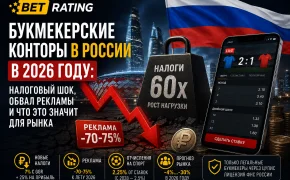
The year 2026 became particularly important for Russian bookmakers due to changes in taxation. Federal Law No. 425-FZ of November 28, 2025, transferred the gambling business tax to the federal level and radically changed the rules for bookmakers and totalizators.
Starting January 1, the tax base for the gambling business tax is defined as the difference between the total amount of accepted bets and the total amount of paid winnings, with a rate of 7%. This marks a fundamental shift from the previous regional model (tax on equipment) to a federal model directly linked to the actual gaming revenue of the operator.
Bookmakers additionally pay profit tax
The changes do not stop there. Starting in 2026, the income of bookmakers and totalizators from gambling activities is also subject to corporate profit tax at a rate of 25%. Previously, this activity was exempt from profit tax.
Estimates suggest that the total tax burden on the industry has increased approximately 60 times — from about 1 billion rubles in budget revenues in 2025 to expected figures around 60 billion rubles.
Target contributions from bookmakers to sports
The Russian model is also characterized by the fact that bookmakers finance sports through mandatory target contributions. Starting in 2026, the minimum contribution amount has increased to 2.25% of the total volume of accepted bets (previously — 2%), with a planned increase to 2.5% in 2028. Additionally, a minimum amount of target contributions has been established for each organizer of gambling in bookmakers — no less than 30 million rubles per quarter.
This means that the legal bookmaker market is used by the state not only as a source of taxes but also as a source of funding for the sports system.
Tax on player winnings
Winnings from a bookmaker are considered income and are subject to personal income tax (PIT). However, it is in this section that a change occurred in 2026 that is not yet reflected in most old materials about betting.
The tax base is defined as the difference between the winnings and the amount of the bet made (the deposited amount within the corresponding operation) — not as the entire withdrawn amount in full.
PIT rate is no longer limited to the usual 13%
Since 2025, a progressive PIT scale has been in effect in Russia, and winnings are included in the corresponding total tax base. For tax residents, brackets apply depending on the total income for the year:
The progressive rate applies not to the entire income amount but only to the part exceeding the corresponding threshold — just like in the usual calculation of PIT from salaries. For non-residents of Russia, a flat rate of 30% applies to any winnings.
Therefore, the phrase "the tax on winnings from a bookmaker is always 13%" in 2026 is an oversimplification that only applies to relatively small amounts within the first bracket of the scale.
What will change on September 1, 2026
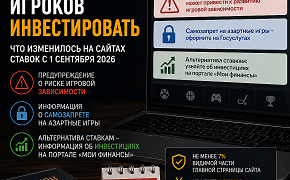
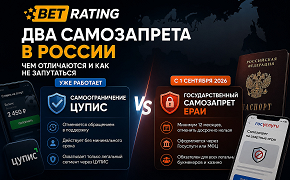
An individual will be able to submit an application to include themselves in a special federal list of people who have refused to participate in gambling. The request is sent to the Unified Regulator of Gambling through the "Gosuslugi" portal or MFC, indicating the duration of the restriction — no less than one year. It will not be possible to withdraw the application early.
This applies not only to bookmaker sites — the new system extends to all regulated gambling activities and becomes part of the federal responsible gaming system. Legal organizers of gambling will be required to provide clear information on their websites and in establishments about how to arrange for self-exclusion.
Bookmakers will have to warn about risks
```htmlFrom September 1, 2026, new obligations related to informing users about the risks and possible consequences of participating in gambling will also come into effect for bookmakers and totalizators.
Thus, the changes in 2026 affect the market from two sides: financial — through taxes, and social — through self-exclusion and responsible gaming.
Why a foreign online casino does not become legal from a foreign license
One of the most common mistakes users make is looking only at the license indicated on a foreign website. The platform may have a permit from Curacao, Anjouan, or another jurisdiction. But this only indicates the presence of a certain status in the corresponding foreign legal system.
This permit does not negate the Russian ban on organizing gambling via the internet.
What if the site just opens?
The technical accessibility of a site also does not confirm its legality. An internet resource can open without a VPN, have a Russian language option, display prices in rubles, accept cryptocurrency, offer support in Russian, and have a mobile application.
None of these signs turn an online casino into a legal Russian operator. Legal status is determined by law, not by the technical accessibility of the resource.
If a foreign casino allows topping up the balance in USDT, BTC, or another cryptocurrency, this also does not make its activities permitted in Russia — the payment method and the legal status of the gambling activity itself are different issues.
Online casino and legal bookmaker: main comparison
| Criterion | Online Casino | Legal Bookmaker |
|---|---|---|
| Operating via the internet | Prohibited | Interactive bets allowed |
| Russian regulated system | No legal market | Yes |
| Regulated payment infrastructure (TSUPIS) | No | Yes |
| Tax agent for winnings | Outside the legal field | Yes, for any amount from 2026 |
| ERAII control | No | Yes |
| Self-exclusion from 01.09.2026 | Applicable to the legal market | Yes |
The main conclusion: betting via the internet in Russia can be legal — but only because the law separately permits interactive bets for bookmakers and totalizators. Such an exception does not exist for online casinos.
Russia and other countries in the region
| Country | Online Casino | Model |
|---|---|---|
| 🇷🇺 Russia | Prohibited | Casinos only in gaming zones + legal online bookmakers |
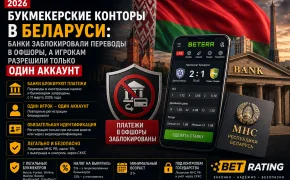
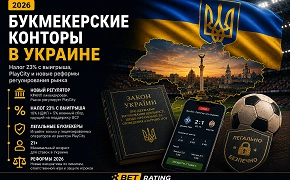
| 🇺🇦 Ukraine | Legal | National licensing (PlayCity) |
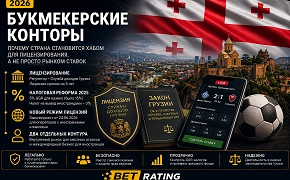
| 🇬🇪 Georgia | Legal | Permissive model |
| 🇦🇲 Armenia | Legal | Licensing and digital control |
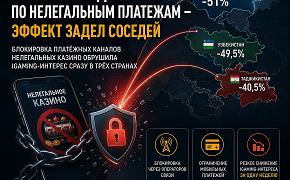
| 🇺🇿 Uzbekistan | Legal with a license | New regulated market |
| 🇦🇿 Azerbaijan | No general market | Legal bets + special casinos |
| 🇹🇯 Tajikistan | No general market | Casinos are criminally prohibited, betting is licensed |
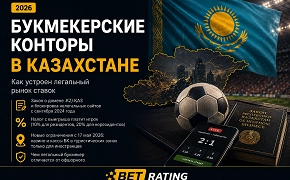
| 🇰🇿 Kazakhstan | Prohibited | Prohibitive model |
Russia occupies an intermediate position. It does not prohibit gambling altogether, but strictly divides them by formats: casinos → only in special physical zones; bookmakers → allowed offline and online in a regulated system; online casinos → prohibited.
Why Russia maintains this model
The logic of the current system is to control each legal format separately. Land-based casinos are geographically isolated within gaming zones. The bookmaker internet market operates through a centralized infrastructure. Illegal gambling activities and payments in its favor are restricted.
In 2026, a new taxation system for bookmakers, profit tax, player self-exclusion, and additional requirements for responsible gaming will be added to this.
Thus, the Russian model is evolving not towards the legalization of online casinos, but towards a stricter formalization of the already permitted bookmaker market.
Does the 2026 reform mean that online casinos may be allowed in the future?
Based on the current legislation, such a conclusion cannot be drawn. Article 5 of Law No. 244-FZ continues to explicitly prohibit the conduct of gambling via the internet outside the provided exception for interactive bets.
The latest market changes are mainly related to taxes on bookmakers, betting control, responsible gaming, self-exclusion, and gaming zones. Therefore, the assumption of the imminent legalization of online casinos is not yet confirmed by the current regulatory framework.
What will happen next
The nearest important date for the Russian market is already known — September 1, 2026, when the federal system for voluntary refusal to participate in gambling will be launched.
In addition, in the coming years, it will be interesting to observe:
- how the self-exclusion system will work and how many citizens will use it;
- how the economy of bookmakers will change after the tax reform;
- how ERAII will develop;
- how mandatory target contributions will change (2.25% → 2.5% from 2028);
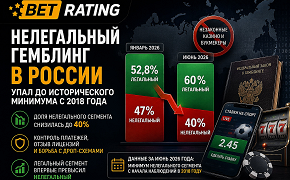
- what measures will be applied to illegal online platforms;
- whether the sixth gaming zone in the Republic of Altai will actually start operating.
Conclusion
Online casinos in Russia are prohibited in 2026. Federal Law No. 244-FZ explicitly prohibits the organization and conduct of gambling via the internet, except for interactive bets accepted by legal bookmakers and totalizators.
At the same time, gambling in Russia is not completely prohibited. Land-based casinos can operate in specially created gaming zones, of which the current version of the law provides for six. Bookmakers, in turn, can legally accept bets via the internet within a regulated system.
```In 2026, this market underwent particularly serious changes: starting January 1, bookmakers and totalizators pay 7% of the difference between accepted bets and paid winnings, as well as a profit tax at a rate of 25%, and the threshold for tax-free winnings of 15,000 rubles has been abolished — now tax is withheld from any amount. From September 1, 2026, a federal mechanism for self-exclusion from gambling will be implemented in the country.
Frequently Asked Questions
Are online casinos legal in Russia in 2026?
No. The law prohibits conducting gambling games over the internet, except for the specified exception for interactive betting with legal bookmakers and totalizators.
Why do bookmakers operate online if online gambling is prohibited?
Because the law explicitly makes a separate exception for accepting interactive bets and paying winnings by bookmakers and totalizators.
Are casinos legal in Russia?
Yes, but only within the gambling zones provided by law. In 2026, the law provides for six such zones.
Is it legal to open an online casino with a Russian license?
No. The current model of law No. 244-FZ does not provide for a separate legal license for classic online casinos.
Does a foreign license make an online casino legal in Russia?
No. A foreign license does not negate the requirements of Russian legislation.
What tax do bookmakers pay from 2026?
The gambling business tax is 7% of the difference between accepted bets and paid winnings. Additionally, from 2026, bookmakers and totalizators are subject to a profit tax at a rate of 25%.
Is it true that winnings up to 15,000 rubles are not taxed by the bookmaker?
No, this is an outdated rule. From January 1, 2026, the threshold has been abolished: the bookmaker withholds personal income tax as a tax agent from any amount of winnings, regardless of size.
Is the tax on winnings always 13%?
No. Since 2025, a progressive personal income tax scale from 13% to 22% applies to the relevant income of residents, depending on the size of the total annual tax base; for non-residents — a flat rate of 30%.
What will change on September 1, 2026?
A mechanism for voluntary self-exclusion from participation in gambling for a minimum period of one year, without the possibility of early cancellation, will come into effect.
Can self-exclusion be arranged online?
Yes, the application is submitted through the "Gosuslugi" portal or MFC to the address of the Unified Regulator of Gambling.
Can you play in a foreign casino using cryptocurrency?
The use of cryptocurrency does not change the prohibitive status of online casinos established by Russian legislation.
Sources
- Federal Law No. 244-FZ of December 29, 2006 "On State Regulation of Activities for Organizing and Conducting Gambling" (current edition)
- Federal Law No. 425-FZ of November 28, 2025 — reform of gambling business taxation effective from January 1, 2026
- Federal Law No. 124-FZ of May 2, 2026 — establishment of the sixth gambling zone in the Republic of Altai
- Materials from the Federal Tax Service of Russia on personal income tax and gambling business tax, 2026
This material was prepared by BET RATING based on Federal Law No. 244-FZ, materials from the Federal Tax Service of Russia, and current changes in legislation as of August 2026. Tax rules, requirements for bookmakers, the list of gambling zones, and the procedure for implementing self-exclusion may change. It is recommended to check the current edition of legislation and official information from government bodies before taking action.
Gambling is associated with the risk of losing money and may cause addiction.














































Comments 0
Please log in on the site, чтобы добавить комментарий, лайк или дизлайк.