

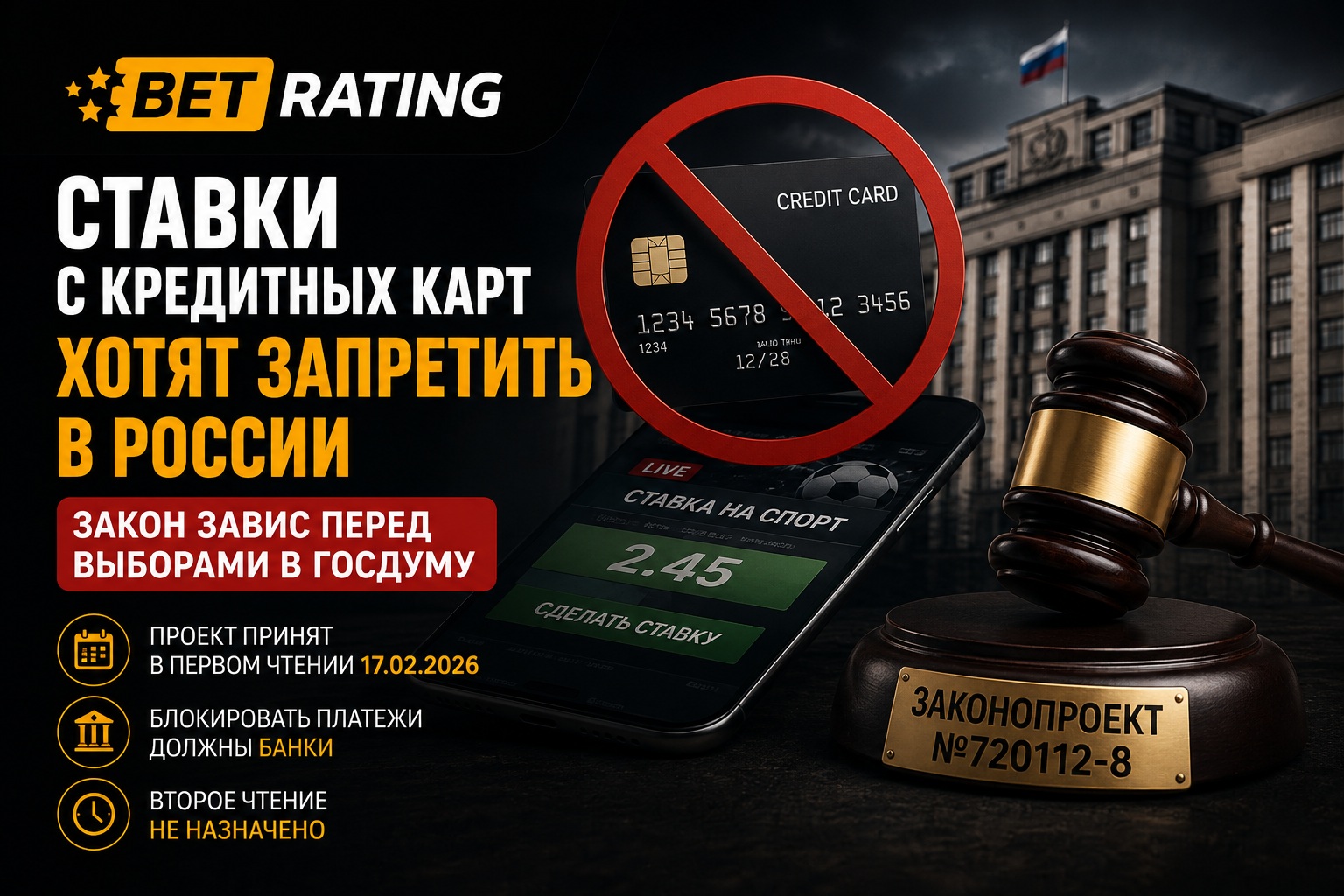
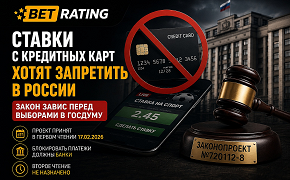
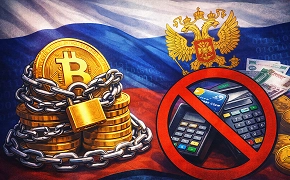
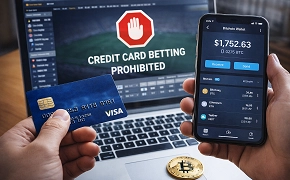
Bill No. 720112-8 to ban betting with credit cards was submitted to the State Duma back in September 2024. On February 17, 2026, it passed its first reading — and since then has not moved forward. Let's analyze what is proposed, why the mechanism requires refinement, and when it might be considered again.
18.09.2024
17.02.2026
not scheduled
from Oct. 2026
In the previous article about fines for violating self-restriction, we discussed how regulation of the Russian betting market continues to tighten in 2026. However, not everything proposed reaches the president's desk for signature. One of the most discussed bills of the year — the ban on accepting bets with credit cards — has stalled halfway and, apparently, will remain an unresolved issue for several more months.
We will explore what exactly the authors of the bill propose, why even the deputies recognize the execution mechanism as technically complex, and how the calendar of the State Duma plays into this.
In Brief
| Question | Answer |
|---|---|
| Bill number | No. 720112-8 |
| Who submitted it | Senators Andrey Kutepov and Alexander Trembitsky |
| When was it submitted | September 18, 2024 |
| Current stage | Passed in the first reading on February 17, 2026 |
| What is proposed to be banned | Bets with credit and corporate cards, borrowed funds of individual entrepreneurs |
| Who should block payments | The bank that issued the card, not the bookmaker |
| Government position | Supported with conditions for refinement |
| Bookmakers' position | Consider the ban technically unfeasible |
| When might it continue | Not earlier than autumn 2026, with a new composition of the Duma |
What is proposed to be banned
The original version of Bill No. 720112-8, submitted by Senators Andrey Kutepov and Alexander Trembitsky on September 18, 2024, consisted of two parts: a ban on accepting bets in bookmakers and totalizators using credit cards, and a ban on placing betting points in the same building as microfinance organizations (MFOs).
The authors' logic is simple: players seeking to recoup lost money often borrow through credit cards and microloans, which increases their debt burden and ultimately — the share of hopeless debt in the financial system.
Since bookmakers and payment systems, through which bets are processed, cannot determine the type of card the client has (debit or credit), the obligation to block such operations is placed not on the bookmaker, but on the bank — the card issuer.
How the position changed during discussions
By the time of the first reading, the wording had noticeably evolved. In November 2025, the government commission supported the bill, but with reservations — and on February 17, 2026, when the document reached its first reading in the State Duma, the government outlined several areas for refinement before the second reading:
- exclude the provision banning proximity to MFOs — loans can be obtained online or through MFO agents, whose activities are outside the control of this provision, and the additional requirement will only increase the burden on the Federal Tax Service, which is already monitoring the gambling sector;
- establish the right of gambling organizers to accept only bets transmitted through the Unified Center for Accounting of Betting Transfers (ECUPIS);
- further work on the issue of restricting bets funded by borrowed funds from the accounts of individual entrepreneurs and corporate cards — according to reports from «Kommersant», this direction was discussed alongside credit cards, but has not yet been fixed as an accepted part of the first draft;
- consider the possibility of restricting transfers to gambling organizers from debit cards via overdraft — that is, close another loophole that is not formally a «credit card», but effectively provides access to borrowed funds.
All these points are subjects for further development, not norms already enshrined in the text adopted in the first reading.
Why the law's mechanism is considered technically complex
The key problem of execution was discussed in the State Duma itself. The executive director of the «First Self-Regulatory Organization of Bookmakers» (which includes Winline, «Liga Stavok», «Betcity» and other major players) Oleg Davydov highlighted the essence of the difficulty:
That is why the bill places the responsibility for blocking such payments not on the bookmaker, but on the bank that issued the card — the deputies themselves acknowledged during discussions that the mechanism for interaction between the bank and the bookmaker needs refinement before the second reading.
There is also a second practical nuance: even with a technically functioning block, a player can first cash out credit funds and then deposit them as regular money — at this stage, tracking the source of the deposit becomes more difficult.
Bookmakers have also drawn attention to the related issue of wording: in their assessment, it is important to clearly establish that taxable income is the net gaming income after paying out winnings, not the total amount of accepted bets.
What the State Duma calendar indicates
After the first reading in February 2026, the bill has not moved forward — the second reading is not scheduled. The State Duma has not provided an official reason for the pause; only the fact of the halt after the first reading is confirmed. Meanwhile, further consideration objectively coincides with the electoral cycle: according to the industry blog Sports.ru, deputies expect to return to the bill no earlier than the autumn session.
- September 18–20, 2026 Elections for the State Duma of the ninth convocation take place.
- By October 20, 2026 The new composition of the State Duma will convene for its first session. ```html
- Autumn 2026 (tentative) The possible return of two suspended bills to the agenda is expected — one concerning the ban on credit betting and the other on banning bets from debtors and incapacitated citizens.
Context: why the topic is on the agenda
The scale of the legal market explains why regulators have taken up this issue. As of early 2026, the volume of bets accepted by legal bookmakers grew by 40% year-on-year, reaching 1.7 trillion rubles, while the number of players exceeded 6 million, with more than 2 million placing bets at least once a month. By the end of 2025, the revenue of betting companies increased by another 9.4%, to 1.9 trillion rubles.
At the same time, Deputy Finance Minister Ivan Chebeskov estimated the total spending of Russians on sports betting — including the illegal segment — at about 2 trillion rubles per year, noting that the volumes in the illegal segment could be even higher.
How this relates to other regulations in 2026
The year has been eventful for the Russian betting market: self-exclusion and penalties for its violation (law No. 248-FZ) have been implemented, taxes have increased, the legalization of online casinos is being discussed, and simultaneously, two protective bills for players — concerning credit betting and debtors — are stalled. This creates a heterogeneous picture: some initiatives related to direct money control (taxes, fines) are moving quickly, while initiatives requiring coordination with the banking sector and facing industry resistance are stalling.
What will happen next
- whether the bill will return to the agenda immediately after the new Duma session begins or will be postponed further;
- whether the "bank blocks it themselves" mechanism will remain or a more feasible technical scheme will be found;
- whether a provision limiting overdrafts on debit cards will be adopted;
- how the bill banning bets from debtors and incapacitated individuals will progress in parallel;
- whether the industry will respond with further public assessments of the potential market contraction.
Conclusion
The ban on accepting bets from credit cards in Russia (bill No. 720112-8) remains an idea that has only passed the first of three mandatory readings in the State Duma — and has not progressed since February 2026. The technically complex mechanism in its current form (the bank must independently identify and block targeted payments) requires further development, and further consideration may be postponed to the autumn session and the period of the new Duma's work.
For readers and market participants, this means one thing: while the ban is not in effect, bets from credit cards are still technically possible where the payment system does not block them. But the direction of regulation is clearly indicated — the question is when and in what form the bill will ultimately be adopted.
Frequently Asked Questions
Are bets from credit cards currently banned in Russia?
No, the relevant bill has only passed the first reading in the State Duma and has not come into force.
Who introduced the bill to ban credit betting?
Senators Andrey Kutepov and Alexander Trembitsky — bill No. 720112-8, submitted on September 18, 2024.
When was the bill adopted in the first reading?
February 17, 2026.
Who will be responsible for blocking bets from credit cards under this law?
The bank that issued the card — since bookmakers and payment systems cannot determine the type of card the client has.
Why is the mechanism of the law considered difficult to implement?
Bookmakers and payment systems do not see the type of card the client has, so the obligation to block is placed on the issuing bank — deputies in the State Duma have acknowledged that the interaction between the bank and the bookmaker requires refinement before the second reading.
When will the bill be reviewed again?
The exact date has not been announced. Further consideration may be postponed to the autumn session and the period of the new Duma's work, which will convene after the elections on September 18-20, 2026.
Will the ban affect corporate cards and loans for individual entrepreneurs?
This is a discussed area for refinement for the second reading, and not necessarily a provision of the already adopted first reading version — according to reports from "Kommersant", it was about credit and corporate cards and borrowed funds of individual entrepreneurs together.
Are there any other similar bills on hold?
Yes, a bill banning the acceptance of bets from individuals in the debtor registry and from incapacitated citizens is also stalled — it will likely be reviewed in the autumn along with the ban on credit betting.
Sources
- TASS, RIA Novosti — «The State Duma adopted a ban on collecting bets from credit cards in the first reading», February 17, 2026
- «Vedomosti» — «The government supported the ban on accepting bets from credit cards», November 2025
- Forbes.ru — «The government approved the ban on bets funded by credit and corporate funds»
- Sports.ru (betting industry) — «Betting in Russia from September 1: self-exclusion, credit cards, hidden advertising, and other initiatives of the State Duma»
- TAdviser — «The Russian betting market, 2026» (statistics on turnover and revenue)
This material was prepared by BET RATING based on publications from Russian media and materials from the State Duma as of August 2026. The status of the bill may change; the article will be updated as new information becomes available.
Gambling is associated with the risk of losing money and can lead to addiction.












































































































































Comments 0
Please log in on the site, чтобы добавить комментарий, лайк или дизлайк.