

Material prepared for publication on September 17, 2026.
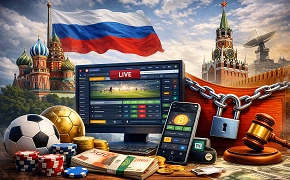
Until recently, government control over gambling was primarily associated with licenses, taxes, and blocking illegal sites. In 2026, the model is changing. Regulators are increasingly seeking to control not only the company but also specific operations: who is funding the account, who owns the card, whether a person can place a bet, whether they are listed in the registry of restricted persons, and on what basis the operator allowed them to play.
Russia, Kazakhstan, Belarus, Ukraine, and Uzbekistan are taking different paths, but a common direction is already noticeable. The market is gradually transforming into a digital framework where the operator's license, the player's identity, payment, and the right to participate must be interconnected.
BET RATING compared five regulatory models and analyzed what this transition means for players, bookmakers, and online casinos.
Main trend of 2026: control shifts to the player and transactions
The classic regulatory model answered the question: does the company have the right to accept bets? The new model adds several more questions:
- who exactly is trying to deposit money;
- does the payment instrument belong to them;
- is this person allowed to participate in gambling;
- is the operation registered in a government or centralized system;
- is there a self-exclusion or other restriction in effect;
- can the operator send this person advertising.
That is why the changes of 2026 are more significant than yet another update of the bookmaker app interface. They affect the very architecture of the market: access to play increasingly depends not only on the account with the operator but also on data in external registries.
Five markets — five models of digital control
| Market | Key Mechanism | What changes for the player |
|---|---|---|
| Russia | Unified list of voluntarily self-excluded from gambling | Self-exclusion applies not just in one app, but in the regulated framework |
| Kazakhstan | Unified accounting system and automatic restriction checks | A bet attempt may be rejected based on registry data |
| Belarus | Verification of identity, ownership of payment means, and transfer restrictions | Using someone else's card, having a duplicate account, or incomplete identification becomes grounds for refusal |
| Ukraine | Registry of restricted persons, digital licensing, and online monitoring | Self-restriction and legality checks become part of the digital infrastructure |
| Uzbekistan | Licensed model with centralized regulation | Formal market approval does not replace the verification of a valid license |
These systems cannot be considered identical. They have different legal bases, timelines, lists of restrictions, and technical maturity. The common feature lies elsewhere: the regulator wants to see not only the operator but also the flow of money from an identified user to a specific bet.
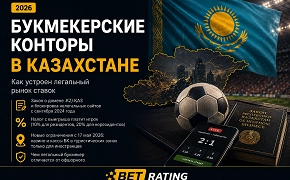
Kazakhstan: the bet goes through a verification of the right to play
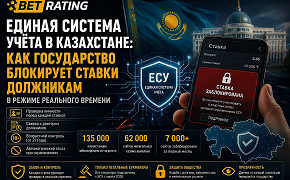
Kazakhstan demonstrates the most illustrative example of automated access. The relevant government committee's website has published sections on the Unified Accounting System, the registry of organizers, and lists of legal and illegal companies.
According to data cited by the publication Kursiv, referencing a response from the Prime Minister to deputies, from March 27 to June 7, 2026, the system identified about 433 thousand users. 135 thousand people were barred from participating in betting: over 116 thousand debtors, more than 15 thousand self-restricted individuals, and over 4 thousand citizens falling under other grounds.
These figures illustrate the scale of change. Restriction ceases to be a formal entry in a document: it is verified at the moment of the user's interaction with a legal bookmaker.
For the player, this means that successful registration or having an old account does not guarantee the ability to place a new bet. For the operator, it means that the internal customer database must work in conjunction with the external control system.
Russia: one self-exclusion instead of blocking individual accounts
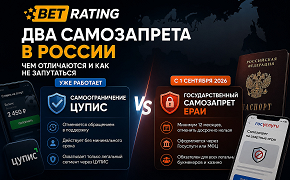
As of September 1, 2026, Russia has implemented a mechanism for voluntary self-exclusion from gambling. Applications are submitted to the Unified Regulator of Gambling through State Services or MFC, and the minimum restriction period is 12 months.
The fundamental difference from previous tools is the unified list. Deleting an app or contacting the support of one bookmaker only affects that specific service. Inclusion in the list creates legally mandated obligations for regulated market participants.
After updating the information, the operator must not accept new bets from individuals included in the list. The law also regulates access to the gaming account, targeted advertising, and settlements on previously concluded bets. The legal basis for the mechanism is contained in the Federal Law No. 575-FZ with subsequent clarifications.
The Russian model makes self-exclusion not a function of a specific brand but an element of the market infrastructure. This is one of the main signs of the transition from local moderation of accounts to centralized access control.
Belarus: the player's identity must match the source of funds
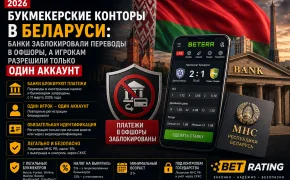
Belarus has strengthened control through identification and payment discipline. Since March 11, 2026, the provisions of Decree No. 226 have been in effect. An official clarification from the Ministry of Taxes and Levies indicates that organizers verify the validity of documents, ownership of bank accounts, cards, and e-wallets, the presence of duplicate accounts, and the completeness of identification.
A player cannot use someone else's card or wallet, present someone else's documents, have multiple accounts in one virtual gambling establishment, or share access data with another person. Without the necessary verification, participation in the game is not allowed.
A separate element is the restriction on payments to foreign online casinos. Belarusian banks must refuse citizens the corresponding transfers. An official description of the rules has been published by the Ministry of Taxes and Levies of Belarus.
As a result, control is built not only around the site. The connection "person — account — payment instrument" is verified. If one element belongs to another person, the operation may not go through.
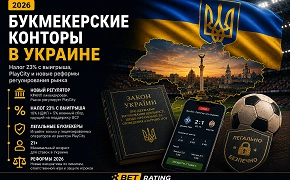
Ukraine: registry, online monitoring, and digital licensing
The Ukrainian regulator PlayCity describes its goal as creating a transparent, controlled, and legal market. Among the stated directions are the digitization of licensing issuance, online monitoring of licensed operators' activities, blocking illegal casinos, and updating the registry of persons restricted from participating in gambling.
Self-restriction here becomes part of a broader digital reform. The registry is needed not only for storing applications: it should be used by operators for access verification. At the same time, online monitoring creates a basis for comparing the actual activities of licensed companies with their reporting.
On the official website of PlayCity, the signs of an illegal resource are also listed: lack of identification, transfers to personal cards, use of cryptocurrency as an opaque way to top up, and a link only to a foreign license without Ukrainian permission.
This is an important signal for the entire region. A foreign license may confirm the status of a company in another jurisdiction, but it does not replace local permission where it is required.
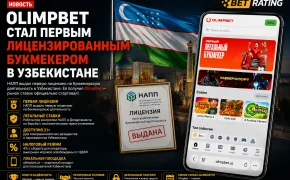
Uzbekistan: legalization is the beginning, not a ready market
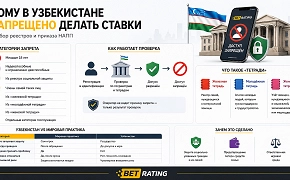
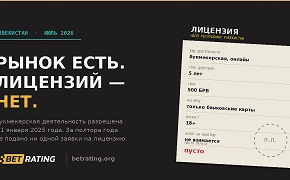
Uzbekistan has chosen the path of a licensed market for online games based on risk and betting activities. However, formal permission for the industry and the actual emergence of functioning licensed operators are different stages.
For users, the main source of verification should remain the electronic register of the National Agency for Prospective Projects. An advertising statement about operating in Uzbekistan, support for the local language, or acceptance of the national currency does not, by itself, confirm the presence of a license.
This example is important for analyzing the entire region: a new law does not create a market instantly. Licensing procedures, technical infrastructure, payment rules, and publicly verifiable information about operators are necessary.
Why do governments build such systems
Centralization addresses several tasks at once. It allows for quicker identification of illegal operations, applies self-restrictions not only within a single company, and links financial control with client identification.
For the regulator, a unified system provides a more complete picture of the market. For licensed operators, it creates uniform rules but simultaneously increases the cost of compliance. Companies must maintain integrations, protect personal data, update verification procedures, and explain to clients the reasons for refusals.
For players, the effect is dual. On one hand, it becomes harder to use someone else's documents, bypass self-restrictions, or transfer money to an opaque operator. On the other hand, the volume of data involved in checks increases, as does the cost of a technical error.
What risks arise with digital control
False data matches
If the system uses multiple registers, outdated or incorrect information can lead to refusals. It is important for the player to receive not just a message saying "operation declined," but also a clear procedure for appeal.
Protection of personal information
Registers of self-restricted individuals should not turn into open lists. Access to them should be limited to the purposes for which the information was collected.
Part of the audience moving to illegal sites
The stricter the regulated framework, the more actively offshore platforms can promise "play without checks." The absence of identification, a transparent license, and an official dispute resolution process should be perceived as a risk, not an advantage.
Unclear reasons for blocking
The player must distinguish between self-restriction, legal limitations, document checks, payment method blocking, and internal operator decisions. These situations have different grounds and procedures for further actions.
What to check before registering in 2026
- Legal entity and license. Check not only the brand but also the company, domain, and type of permitted activity.
- Status of the license in the official register. The regulator's logo at the bottom of the page is not proof.
- Identification rules. Find out in advance what documents and video checks may be required.
- Payment restrictions. The account, card, or wallet must belong to the user themselves unless local rules provide for exceptions.
- Self-restriction procedure. Find out if a unified state mechanism is in place or only specific operator tools.
- Complaint procedure. A reliable platform explains where to turn in case of erroneous refusals or disputes over payments.
What comes next
The next stage of market development is not just an increase in the number of blocks. Regulators are likely to expand automatic data exchange, accelerate the updating of registers, and require operators to provide more detailed reporting.
At the same time, there is no general "CIS player register." Each country creates its own system, and a restriction in one jurisdiction should not automatically be considered effective in another. Similarly, an operator's permission in one country does not grant them universal rights to accept players across the region.
The main outcome of 2026 is already visible: the legal market is becoming a market of verifiable connections. It is important not only where the bookmaker is registered but also who is placing the bet, where the money comes from, and whether the right to participate is confirmed.
Frequently Asked Questions
Is there a unified betting control system for all CIS countries?
No. Each country has its own laws, registers, and regulators. Similar approaches do not imply technical integration of systems.
Can I use someone else's bank card to top up?
In some markets, this is explicitly prohibited or leads to additional verification. It is safer to use only payment instruments registered in the name of the gaming account holder.
Does a foreign license make a casino legal in my country?
Not necessarily. A foreign license is valid within the jurisdiction that issued it and does not replace local permission if national legislation requires it.
Does self-restriction apply to all bookmakers in the world?
No. State mechanisms apply to participants in the corresponding regulated market. They do not constitute a global technical block of all sites.
Why can a legal bookmaker decline a bet?
Reasons may include information in the register of restricted individuals, incomplete identification, discrepancies in payment data, legal requirements, or internal risk management rules. The grounds should be requested from the operator.
Where to check the license?
In the official register of the relevant country's regulator. Information on the operator's website is useful but should be cross-referenced with a government source.
This material is informational and analytical in nature. The rules and statuses of operators may change. Before registration, check current information from official sources. BET RATING does not accept bets or gaming deposits.


















































Comments 0
Please log in on the site, чтобы добавить комментарий, лайк или дизлайк.