

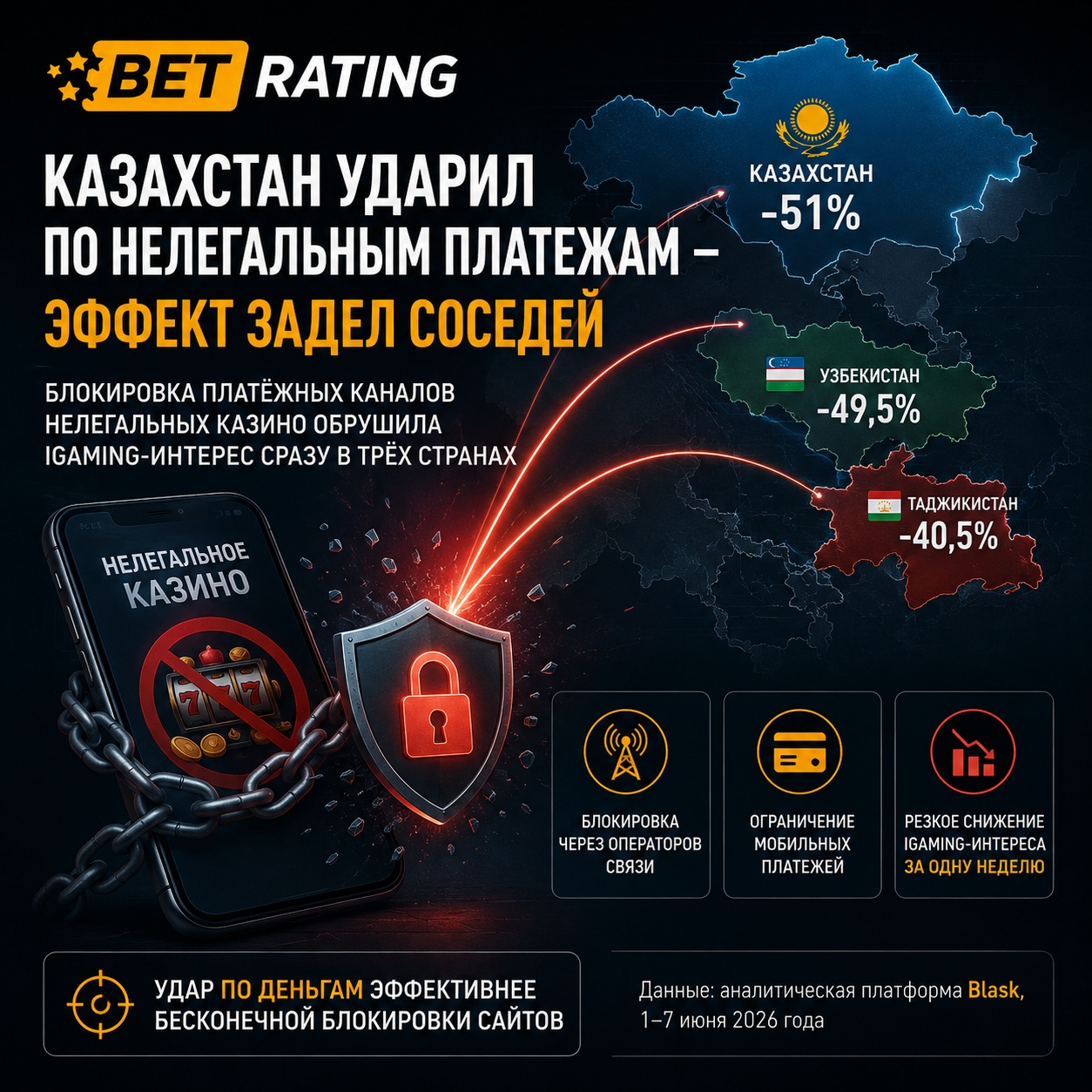
In May 2026, Kazakhstan blocked mobile payments in favor of illegal online casinos. According to the analytical platform Blask, iGaming interest in the country fell by 51% in a week. During the same week, interest also sharply declined in neighboring countries — but each drop had its own story.
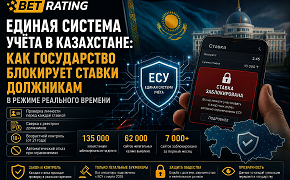
In the article about the Unified Accounting System in Kazakhstan, we discussed how the government integrated player verification directly into the payment infrastructure of the legal market. However, there is another side to Kazakhstan's regulation — a direct blow to the finances of illegal operators. And this blow, judging by recent data, turned out to be much more devastating for user interest than expected.
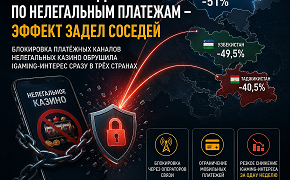
According to the analytical platform Blask, which tracks user interest in iGaming through Google search queries, after Kazakhstan blocked mobile payments in favor of illegal online casinos in May 2026, interest in shadow gambling in the country fell by approximately 51% in the week from June 1 to June 7, 2026. During the same week, Blask recorded a sharp decline in iGaming interest in neighboring countries: by 49.5% in Uzbekistan and by 40.5% in Tajikistan. However, the report does not prove that these declines were a direct result of Kazakhstan's measures: for Uzbekistan, Blask specifically points to the prolonged launch of the licensed market, while for Tajikistan, it does not name a definitive local trigger.
In Brief
| Indicator | Value |
|---|---|
| When measures were introduced in Kazakhstan | May 2026 |
| What the Financial Monitoring Agency did | Required mobile operators to block suspicious payments in favor of illegal casinos |
| Decline in iGaming interest in Kazakhstan | ≈51%, week of June 1–7, 2026 |
| Decline in iGaming interest in Uzbekistan | 49.5%, same week — according to Blask, due to the prolonged launch of the licensed market |
| Decline in iGaming interest in Tajikistan | 40.5%, same week — local trigger not established |
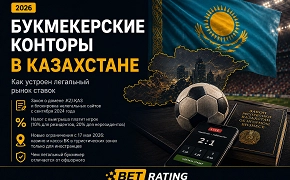
| Status of online casinos in Kazakhstan | Completely banned |
| What exactly Blask measures | User interest based on Google search queries, not monetary turnover |
What Kazakhstan Did
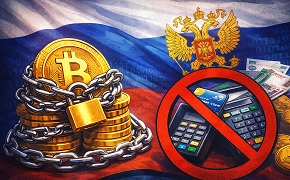
Unlike classic measures against illegal gambling — blocking specific sites and imposing fines — the Kazakh approach targeted the infrastructure without which illegal operators cannot physically operate. In May 2026, the Financial Monitoring Agency required mobile operators to block suspicious payments in favor of illegal online casinos — after tests showed that it was possible to top up accounts on such platforms through mobile phone balances with operators Tele2, Beeline, Kcell, and Activ.
The scale of the decline stands out against the backdrop of the fact that online casinos are completely banned in Kazakhstan: the legal market is limited to a small group of licensed domestic bookmakers, while all other demand for online gambling has historically been served by offshore and gray platforms.
Why All of Central Asia Declined Simultaneously
During the same week, Blask recorded a sharp decline in iGaming interest in neighboring countries: by 49.5% in Uzbekistan and by 40.5% in Tajikistan. However, each country, according to the report, has its own story:
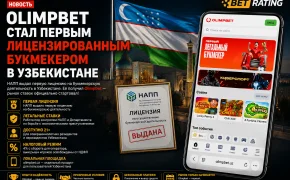
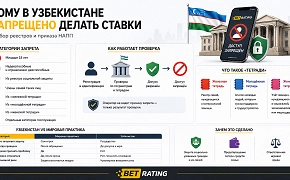
- Uzbekistan: Blask explains the decline by the prolonged launch of the licensed domestic market — meaning it is not an external shock from Kazakhstan, but rather the internal dynamics of the Uzbek legalization market, which we discussed in the article about the duopoly of Olimpbet and Oltinbet;
- Tajikistan: the Blask report does not name a definitive local trigger for the decline.
Why a Blow to Payments May Be More Effective Than Blocking Sites
The Kazakh case is not the only illustration of the logic that is increasingly spreading among regulators worldwide: a blocked site can be circumvented through a new domain or mirror in a matter of hours, while a closed payment channel is significantly more difficult to restore.
Vietnam
The police arrested the head of a marketing agency and 17 employees promoting 22 gambling platforms under the guise of a legal business — according to investigators, the scheme brought in about 3.7 trillion dong (£105,830) since the beginning of 2026.
Netherlands
The regulator Kansspelautoriteit announced at the Gaming in Holland conference that it is shifting its focus of control to banks, payment providers, hosting companies, and marketing agencies — it turned out to be practically impossible to fine the offshore companies themselves.
The overall conclusion from industry analysts: the pursuit of illegal operators themselves is often less effective than working with the companies that serve them — banks, payment systems, hosting providers, and marketing networks.
Timeline
- May 2026The Financial Monitoring Agency of Kazakhstan requires mobile operators to block suspicious payments in favor of illegal online casinos after tests showed the possibility of topping up through phone balances with Tele2, Beeline, Kcell, and Activ.
- June 1–7, 2026iGaming interest in Kazakhstan falls by approximately 51%; during the same week, Blask records a decline of 49.5% in Uzbekistan and 40.5% in Tajikistan — for different, not necessarily related reasons. ```html
- June 11, 2026 The analytical platform Blask publishes data on the scale of the decline; the material is disseminated by industry publications.
What This Means for the Rest of Central Asia
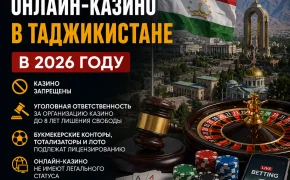
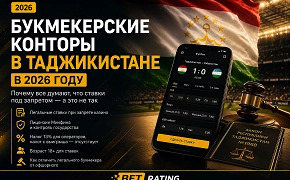
For readers who have been following our materials on regional regulation — on the duopoly of legal bookmakers in Uzbekistan or on the specifics of the Tajik market, where casinos are criminally banned while betting is licensed — this story adds an important practical layer: the simultaneous decline in iGaming interest across three countries in the region does not necessarily indicate a common cause. The Uzbek market has its own internal dynamics of legalization, the Tajik decline lacks a clear explanation in the available data, and the Kazakh market has a specific, well-documented trigger in the form of payment blocks via mobile balance.
What Will Happen Next
- Will the decline in iGaming interest in Kazakhstan be sustainable, or will illegal operators find new payment channels, as happened in Russia after the revocation of the license from QIWI Bank;
- Will Kazakhstan extend similar measures to other payment channels beyond mobile balance;
- Will more detailed data on the causes of the decline in Tajikistan emerge;
- How will the further launch of the legalized market affect Uzbekistan's indicators;
- Will the model of "striking a specific payment channel" become standard practice for regulators in Central Asia.
Conclusion
After the Financial Monitoring Agency of Kazakhstan mandated mobile operators to block payments to illegal online casinos via mobile balance in May 2026, iGaming interest in the country, according to Blask, fell by approximately 51% in the week from June 1 to June 7. During the same week, interest sharply declined in neighboring countries — by 49.5% in Uzbekistan and by 40.5% in Tajikistan. However, this is not a proven "domino effect": the report itself explains the three declines differently, and for Tajikistan, it does not specify a local trigger.
A similar logic was already evident in Russia after the revocation of the license from QIWI Bank, but it was not a definitive solution: part of the illegal segment there eventually found new payment workarounds. Whether the Kazakh effect will last longer and whether the regional coincidence is something more than a coincidence will become clear as new data emerges.
Frequently Asked Questions
What has Kazakhstan done to combat illegal gambling?
In May 2026, the Financial Monitoring Agency mandated mobile operators (Tele2, Beeline, Kcell, Activ) to block suspicious payments to illegal online casinos — after tests showed the possibility of topping up accounts via mobile balance.
How much has iGaming interest declined in Kazakhstan?
According to the Blask platform, approximately 51% in the week from June 1 to June 7, 2026.
Has this affected other countries?
During the same week, Blask recorded a decline in iGaming interest of 49.5% in Uzbekistan and 40.5% in Tajikistan — but the initial report does not prove a direct causal link with Kazakh measures: for Uzbekistan, it points to a prolonged launch of the licensed market, while for Tajikistan, it does not specify a clear trigger.
Are online casinos legal in Kazakhstan?
No, online casinos are completely banned in Kazakhstan; the legal market is limited to a small group of licensed domestic bookmakers.
What exactly does the Blask index measure?
User interest in iGaming based on Google search query data, rather than actual monetary turnover in the industry.
Why might payment restrictions be more effective than blocking websites?
A blocked website can quickly be replaced with a new domain or mirror, whereas restoring a specific blocked payment channel can be more challenging — this principle is supported by data from Kazakhstan and similar conclusions from regulators in other countries.
Are there similar examples in other countries?
Yes, in Vietnam, the head of a marketing agency promoting 22 gambling platforms was arrested, and the Dutch regulator Kansspelautoriteit announced a shift in focus to banks, payment providers, and hosting companies.
Will the decline in iGaming interest in Kazakhstan be sustainable?
This is still unknown. A similar effect in Russia after the revocation of the license from QIWI Bank eventually partially smoothed out — the illegal segment found new payment routes before starting to decline again amid new measures.
Sources
- iGamingToday — "Kazakhstan's Crackdown Hits Illegal Gambling Where It Hurts Most: Payments," June 11, 2026
- iGaming Expert — materials on the regional effect of Kazakh measures, June 2026
- The analytical platform Blask — data on the activity of the legal and illegal gambling segments in Central Asia
This material was prepared by BET RATING based on publications from industry sources and data from the analytical platform Blask as of August 2026. Estimates are based on an analysis of activity indicators and may differ from the official statistics of regulators in the region.
Gambling is associated with the risk of losing money. The availability of an illegal platform does not guarantee player rights protection.








































































Comments 0
Please log in on the site, чтобы добавить комментарий, лайк или дизлайк.