

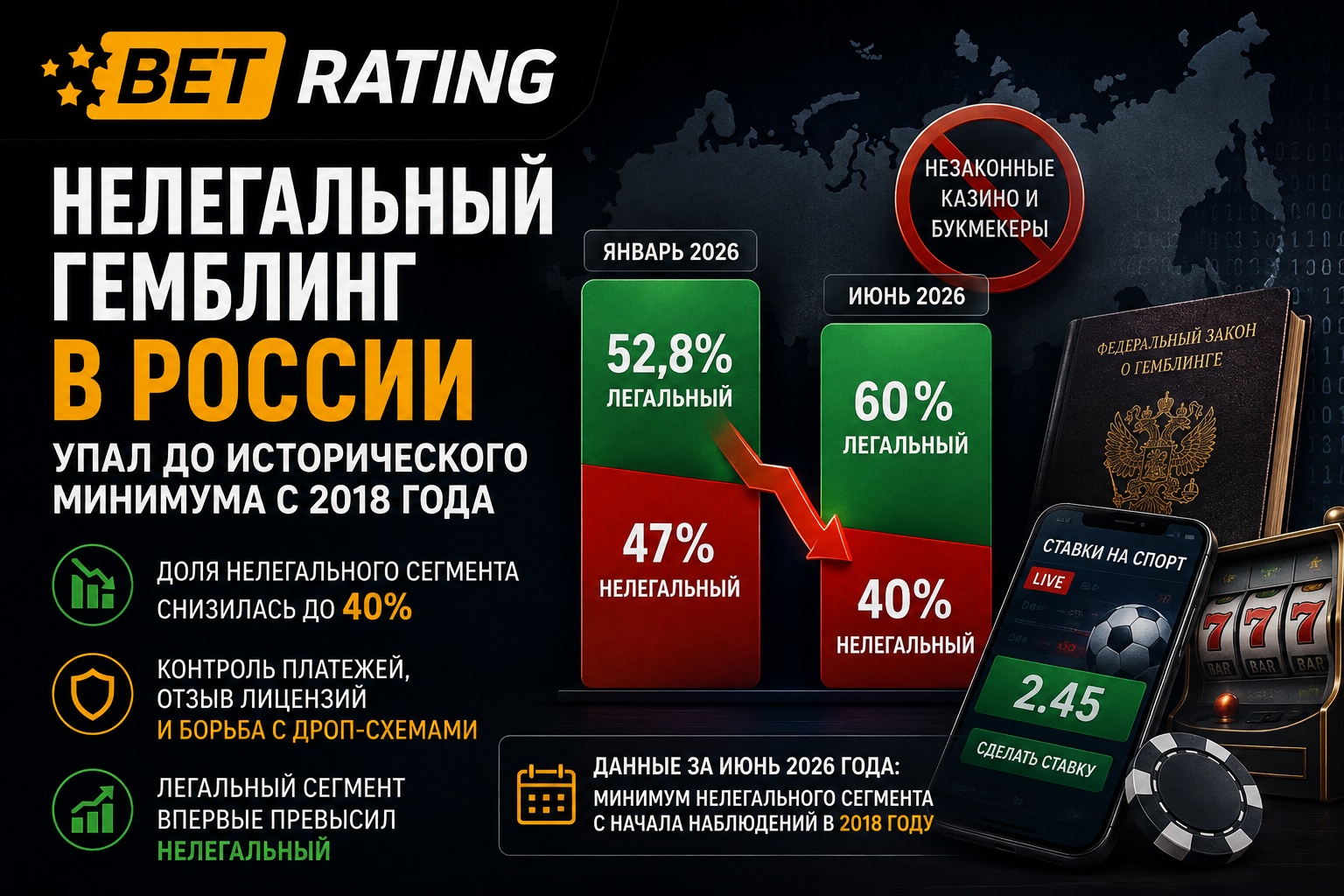
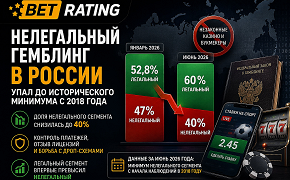
According to the analytical platform Blask, as reported by "Kommersant", the share of the shadow segment in the structure of search demand for online gambling in Russia decreased to 40% in June 2026 — the lowest figure ever recorded. We analyze what lies behind this trend and why the legal market may still shrink by the end of the year.
This year, we have been analyzing how Russian gambling regulation is tightening: starting September 1, a state self-exclusion will come into effect, taxes for bookmakers have increased, the legalization of online casinos is being discussed, and a bill to ban credit betting is stalled. However, amidst all these individual news items, it is easy to overlook the main question: does it actually work? Fresh data surprisingly provides a concrete answer.
According to the analytical platform Blask, which tracks players' search demand, the share of online casino brands operating in the shadow segment and not reporting to regulators decreased to 40% in June 2026 — the lowest figure since monitoring began in 2018. We delve into what has changed and what factors are behind this trend.
In Brief
| Indicator | Value |
|---|---|
| Share of the illegal segment, June 2026 | 40% of demand — the lowest since 2018 |
| Share of the illegal segment, January 2026 | 47% |
| Share of the legal segment, June 2026 | 60% |
| Estimated monthly revenue of the illegal segment, June 2026 | ≈$316 million |
| Peak of the illegal segment (January 2024) | ≈$839 million per month |
| Legal sports betting market, 2025 | 1.9 trillion ₽ (+8.4% year-on-year) |
| Target contributions to sports, 2025 | 38 billion ₽ (+≈8%) |
| ERAi forecast for the legal market at the end of 2026 | Possible decline of 4–5% due to tax burden |
How the ratio of legal and illegal segments in demand has changed
A key turning point occurred back in July 2024: at that time, the legal segment of bookmakers surpassed the shadow segment in demand for the first time in the history of observations. Since then, the dynamics have not been linear — the illegal segment temporarily retreated, but the overall trend has steadily moved towards the legal market.
What became the main driver of the collapse
One episode turned out to be particularly significant for the entire trajectory of the market — although it occurred more than two years before the current minimum.
The effect was neither immediate nor final: by August 2025, the illegal segment partially recovered to about $442 million per month — operators found new payment workarounds. But then a new round of decline followed, this time related to the tightening of control over so-called drop schemes — the fragmentation and withdrawal of stolen or illegally obtained funds through front accounts. By June 2026, the monthly estimate of the gray segment fell to $316 million.
Timeline
- January 2024Peak of the illegal online gambling segment — about $839 million per month.
- February 21, 2024The Central Bank revokes the license of Qiwi Bank; analysts estimate that the shadow market loses one of its key payment channels.
- July 2024The legal segment of bookmakers surpasses the shadow segment in demand for the first time in the history of observations.
- December 2024Monthly revenue of the illegal segment falls to about $263 million — a nearly 70% drop from the January peak.
- August 2025Partial rebound of the illegal segment — to $442 million per month.
- 2025–2026Tightening control over drop schemes leads to renewed decline of the gray segment.
- January 2026Share of the illegal segment in total demand — 47%.
- June 2026Share of the illegal segment falls to 40% — the lowest since monitoring began in 2018; revenue estimate — about $316 million per month.
What does tax reform have to do with it and what may change
The success of displacing the illegal segment overlaps with another process that is occurring in parallel — the increase in the tax burden on the legal market itself. Starting in 2026, bookmakers pay a 7% tax on gambling business from gross gaming revenue and a 25% profit tax — we detailed this in an article about tax reform. Target contributions to sports have increased by about 8% year-on-year, reaching 38 billion rubles.
This creates a sort of fork: the more effectively the government cuts off payment channels to the illegal segment, the more important it is not to create simultaneous incentives for players to return to the shadows due to the increased cost of legal bets.
How This Relates to Other Regulations in 2026
The reduction of the illegal segment's share is not an isolated success of one measure, but a cumulative effect of several directions that we have discussed separately throughout the year: revocation of banking licenses from payment channels of the shadow market, control over drop schemes, tax reform that simultaneously increases costs for legal operators, and a general tightening of control through ERAI. Interestingly, the industry itself, represented by a large betting company, sees additional potential in the legalization of online casinos proposed by the Ministry of Finance — according to its representative, this could provide a "serious counter" to the gray segment where there is currently simply no legal equivalent.
What Will Happen Next
- whether the trend of reducing the share of the illegal segment will continue in the second half of 2026;
- how the possible legalization of online casinos will affect the balance between the legal and illegal markets;
- whether ERAI's forecast of a 4–5% reduction in the legal market due to the tax burden will come true;
- whether shadow market operators will find new payment channels to replace the blocked ones;
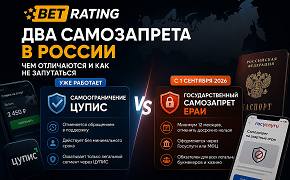
- how the introduction of self-restriction from September 1, 2026, will affect the overall demand structure.
Conclusion
The share of the illegal online gambling segment in Russia fell to 40% in June 2026 — the lowest level since observations began in 2018, according to the analytical platform Blask. This is the result of not one measure, but a combination of factors: the revocation of the license from QIWI Bank back in 2024, which, according to industry analysts, deprived the shadow market of a key payment channel, and the later tightening of control over drop schemes, which did not allow the gray segment to consolidate the temporary rebound of 2025.
At the same time, the industry itself warns: the parallel increase in the tax burden on legal operators may partially neutralize this success if some players find legal bets less profitable and start looking for new ways to return to the shadow segment.
Frequently Asked Questions
What share of gambling demand in Russia currently comes from the illegal segment?
According to Blask's data as of June 2026 — about 40% of the total search demand, which is the lowest since observations began in 2018.
What has been the main reason for the reduction in the share of the illegal segment?
According to industry analysts, the key role was played by the revocation of the license from QIWI Bank in February 2024, which deprived the shadow market of one of its key payment channels, as well as the later tightening of control over drop schemes.
When did the legal betting market first surpass the illegal one?
In July 2024 — for the first time in the history of observations, the legal segment of bookmakers exceeded the shadow one in terms of demand volume.
How much does the illegal segment earn now?
As of June 2026 — about $316 million per month, compared to a peak of approximately $839 million in January 2024.
Can the legal betting market shrink despite successes in combating the illegal segment?
Yes, ERAI predicts a possible reduction in the legal market by 4–5% by the end of 2026 due to the increased tax burden on operators.
How did the legal betting market grow in 2025?
The volume of accepted sports bets increased by 8.4%, reaching 1.9 trillion rubles, and targeted contributions to sports increased by approximately 8%, to 38 billion rubles.
What are drop schemes mentioned in the context of the illegal market?
These are schemes for splitting and withdrawing stolen or illegally obtained funds through dummy accounts — tightening control over such schemes has become one of the factors in reducing the illegal segment.
Could the legalization of online casinos further reduce the share of the illegal market?
According to a representative of a large betting company, the legalization of online casinos proposed by the Ministry of Finance could provide a serious counter to the gray segment in this specific category, where there is currently no legal equivalent.
Sources
- «Kommersant» — «They Played Too Much», data from the analytical platform Blask, July 2026
- CNews — «Russians are gambling less in illegal online casinos and betting with illegal bookmakers», July 2026
- Bank of Russia — official announcement of the revocation of the license from QIWI Bank, February 21, 2024
- Unified Regulator of Gambling (ERAI) — data on the volume of the legal market and forecast for 2026
This material was prepared by BET RATING based on publications from Russian media and data from the analytical platform Blask as of August 2026. Estimates of the illegal market volume are based on an analysis of search demand and may differ from actual industry figures.
Gambling is associated with the risk of losing money. The availability of an illegal platform does not guarantee the protection of player rights.



















































































































Comments 0
Please log in on the site, чтобы добавить комментарий, лайк или дизлайк.