

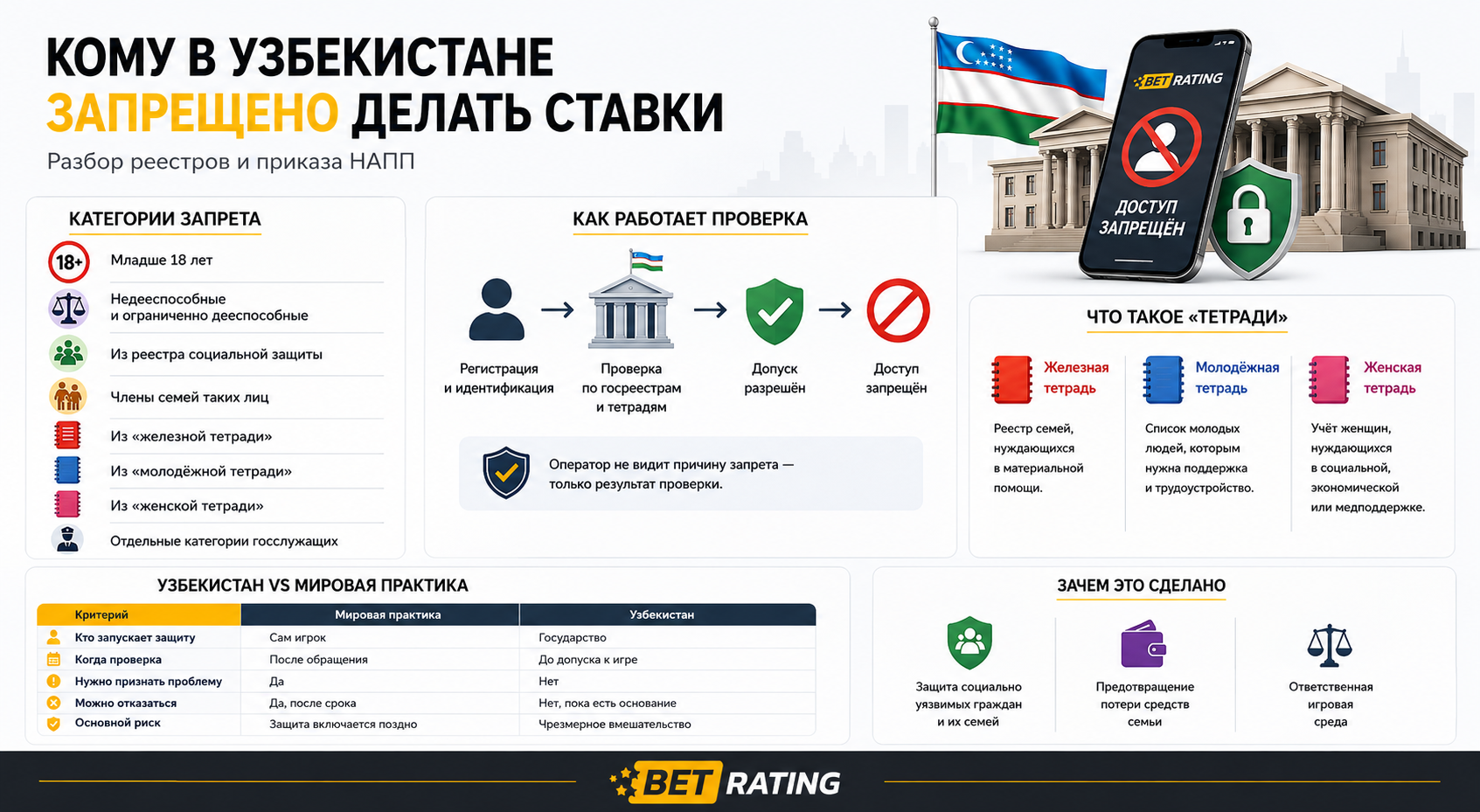
On July 7, 2025, the director of the National Agency for Prospective Projects approved two documents. The first is the Regulation on Licensing Activities for Organizing Online Games, Lotteries, and Betting Activities. The second, registered under number 3642, is a list of categories of citizens of Uzbekistan and foreign nationals prohibited from participating in risk-based games, lotteries, and betting.
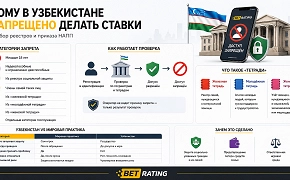
The list includes, in particular:
- persons under the age of majority — a basic restriction that also applies to conducting related payments;
- persons recognized by the court as incapacitated or partially incapacitated;
- persons registered in the "Unified Register of Social Protection," as well as their family members;
- persons included in the "iron," "youth," and/or "women's" registers;
- specific categories of public servants, including employees of the prosecutor's office.
Note the wording: this is not a recommendation for the operator and not an obligation for the citizen to refrain. This is a list that the operator is required to verify.
What are "social registers"
For readers outside Uzbekistan, the term "iron register" sounds mysterious, so context is needed.
"Iron register" appeared in 2020 as a mechanism for targeted support during the pandemic. It is a list of families in need of material assistance, maintained not in a centralized-abstract manner, but in the context of each mahalla, district, city, and region. The idea was for khokims and responsible structures to see the real situation on the ground.
In the fall of 2020, the system was expanded. The "iron register" was supplemented with a "youth register" — a list of young people in need of social support and employment, and a "women's register" — a registry of unemployed women in need of support. Both lists are maintained separately from the "iron" register.
Over time, the "registers" became integrated into the overall architecture of social protection: through relevant funds, families included in the registry of low-income individuals receive social assistance, including support for improving living conditions and health care.
This means that at the time of legalizing betting, the state already had a functioning, detailed database of people in vulnerable financial situations down to the level of mahalla. The regulator did not have to build a mechanism from scratch — it connected betting to what already existed.
Why the ban extends to families
The most atypical detail of the list is the extension of the restriction to family members of individuals from the Unified Register of Social Protection.
The logic here is clear if we look at the problem not through the rights of an individual adult but through the household budget. Social assistance is directed at the family. If one member loses these funds, all others suffer, including children. A ban only on the recipient of assistance can easily be circumvented: bets can be placed by a spouse or adult son using the same card and the same family budget.
This approach is consistent, but it is also the most controversial. An adult capable person loses access to a legal service not for their own actions, but due to their family ties and social status. In most jurisdictions, such a restriction would provoke serious discussion about proportionality.
Declarative protection versus procedural
To assess the scale of the difference, it is useful to compare the approaches.
The declarative model — dominant worldwide. The operator is required to place warnings about risks, provide self-limitation tools (deposit limits, pauses, self-exclusion), and not accept bets from minors. Everything else is the player's responsibility. Protection is only activated when a person recognizes the problem themselves and seeks help.
The weak point is obvious: gambling addiction is characterized by denial of the problem. A tool that requires initiative from someone least capable of demonstrating it kicks in too late.
The procedural model, chosen by Uzbekistan, works differently. It does not ask the person if they consider themselves at risk. It checks them against the state registry upon entry. If the person is on the list — registration does not proceed, regardless of their self-assessment and intentions.
This is fundamentally a stronger protection for those it covers. And fundamentally a harsher government intervention in private decisions — both at the same time.
How the filter should work technically
The mechanism relies on three pillars, as outlined in the rules.
Mandatory identification. Only residents and non-residents of Uzbekistan over 18 years old are allowed to play on licensed platforms. Without identity verification, checking against the registries is impossible, so anonymous registration is excluded by definition.
Only cashless transactions. All payments must be made exclusively through bank cards. Cash is completely excluded. This is not only an anti-money laundering measure — it is also a way to link each transaction to an identified individual.
Verification with state systems. Checking against the "Unified Register of Social Protection" and the "registers" requires the operator to have access to the relevant data or a status verification service. This integration is the technical core of the entire structure.
In total, this means: a licensed bookmaker in Uzbekistan cannot simply be a site with a line. It must be a system integrated into the state digital infrastructure.
Three uncomfortable questions for the model
To evaluate regulation fairly — means seeing not only the intent but also the vulnerabilities.
Question one: privacy. To check status, the operator must somehow know whether a person belongs to a socially vulnerable category. This is sensitive data. How secure is the channel for such verification, and what exactly does the commercial company see — this is a question whose answer affects trust in the system. The optimal solution is when the operator receives not information about status, but a binary response "access allowed / denied."
Question two: relevance of registries. Social status changes. A person may exit the "youth register" by finding a job but remain in the database until the next update. This creates a risk of false denials, and a mechanism for rapid appeal is not yet publicly described.
Question three: shifting to the shadows. The filter is effective only within the legal perimeter. A person denied registration with a licensed operator does not stop wanting to place a bet — they go where no one checks them. A strict barrier to entry into the legal sector without simultaneous action against the illegal one can have the opposite effect: the most vulnerable group ends up in the least protected environment.
The main paradox: a filter without a market
And here we come to the main point.
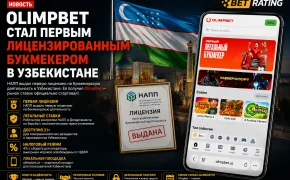
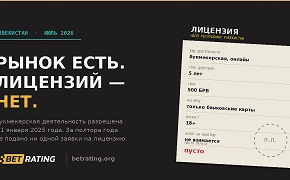
Betting activities in Uzbekistan have been allowed since January 1, 2025. The licensing procedure has been approved, the list of prohibited categories has been confirmed, and the requirements for payments have been established. However, as of 2026, no company has received a license — applications have simply not been submitted to the NAPP.
This means that the mechanism described above exists solely on paper. There is no one to verify players against the registries because there is not a single operator required to do so.
At the same time, demand has not disappeared. It is serviced by platforms with foreign licenses, for which Uzbek social registries do not exist in principle. Neither the "iron register," nor the status of a social assistance recipient, nor age confirmed by a government document is checked there.
This creates a paradox: the country has created, probably, the most thought-out mechanism in the region to protect vulnerable groups from gambling — and it currently protects no one. Moreover, the very people for whom it was written are now in an environment without any filters at all.
What this means in practice
For the average person. There is currently no licensed bookmaker in Uzbekistan. Any platform offering its services operates outside the national legal framework: there is no registry check, no reserve fund under local control, and no regulator to turn to in case of a payout refusal. It is important to understand this before registration, not after a dispute over winnings.
For an operator considering the market. The requirement for integration with state registries is a separate cost item and a separate technical project that needs to be factored into the model alongside the licensing fee and reserve fund. It is likely that it is the combination of these requirements, rather than any one of them, that explains the lack of applications.
For the regulator. The situation presents an uncomfortable dilemma. Easing the requirements will reduce the level of protection for which everything was built. Maintaining the status quo leaves vulnerable groups in an unregulated environment. Neither option seems obviously correct.
Frequently Asked Questions
Who is prohibited from betting in Uzbekistan?
Minors, persons recognized by the court as incapacitated or partially incapacitated, citizens from the Unified Register of Social Protection and their family members, persons from the "iron," "youth," and "women's" registers, as well as specific categories of public servants. The complete list is contained in the NAPP order dated July 7, 2025.
What is the "iron register"?
A state registry of low-income families in need of material assistance. It is maintained in the context of mahallas, districts, cities, and regions.
What do the "women's" and "youth" registers cover?
The "women's register" encompasses unemployed women in need of support, while the "youth register" covers young people in need of social support and employment. They are maintained separately from the "iron register."
Why does the ban apply to family members?
Because social assistance is directed at the household, not an individual. A ban only on the recipient of assistance could easily be circumvented through a relative with the same family budget.
Is this mechanism currently in effect?
No. The verification against the registries should be conducted by licensed operators, but no licenses have been issued in Uzbekistan yet.
At what age is participation allowed?
From 18 years old. Participation of minors in games, bets, and lotteries, as well as conducting related payments, is prohibited by law.
Conclusion
Uzbekistan has done what few others do: it has translated the protection of vulnerable groups from the realm of appeals into the realm of procedure. Instead of a banner saying "play responsibly" — there is a check against the state registry upon entry. For people in severe financial situations, such protection is incomparably more reliable than voluntary self-exclusion.
The price of this solution is noticeable government intervention in private choice, including restrictions for adult capable individuals based on family ties, as well as high technical requirements for operators, which, judging by the lack of applications, have become part of a prohibitive barrier.
The outcome as of mid-2026 looks like this: the mechanism is written but not launched. And until it is launched, the most protected on paper category of citizens remains completely unprotected in practice.
This material is informational and analytical in nature and does not constitute a call to participate in risk-based games. Gambling is associated with the risk of losing funds and can lead to addiction. Participation of persons under 18 years old is prohibited by law. If gambling has ceased to be entertainment and begins to affect finances, work, or relationships, it is advisable to seek consultation from a specialist.

























































Comments 0
Please log in on the site, чтобы добавить комментарий, лайк или дизлайк.